Stone, Glass and Silence: Reading Edinburgh Through Sacred Heart’s Quiet Details
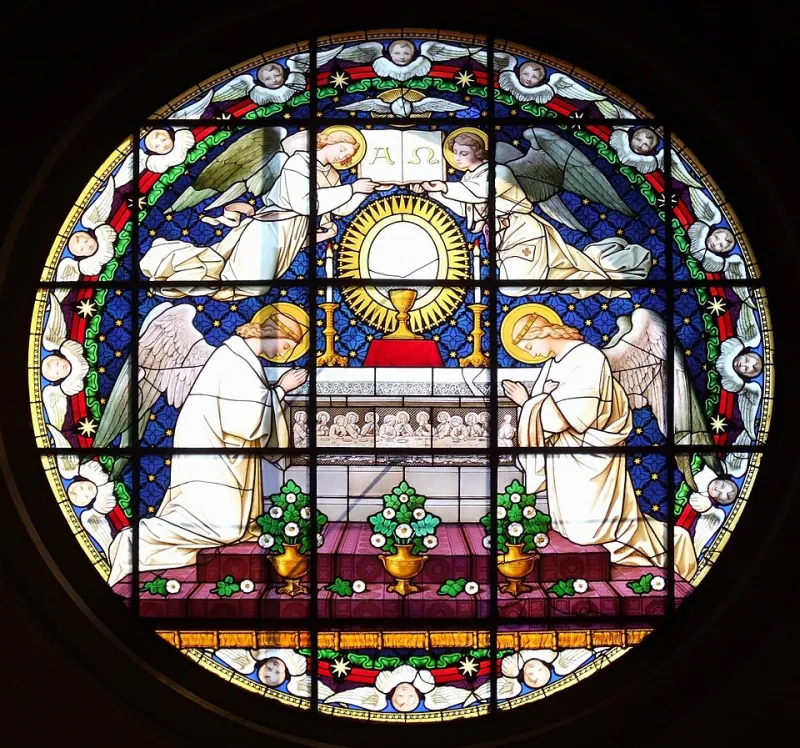
Photo: Pudelek (Marcin Szala), CC BY-SA 4.0, via Wikimedia Commons
Most people who hurry along Lauriston Street see a church and keep going. That is understandable. Edinburgh is a city of stone, and after a while even the handsome buildings start to blur into the background. But Sacred Heart rewards the sort of visit where you are not trying to get anywhere. It is a place of thresholds, glass, memorials and small details that carry the story of a city and the people who have passed through it.
You do not need to be an architectural historian to read a church. You only need to look a little longer than usual. Whether you visit during Advent in 2026 or on a quiet Tuesday in July, these six corners and details are a good place to begin.
1. The threshold
Start at the door. Not the noticeboard, not the leaflet rack, but the actual threshold where the street gives way to the interior. Stone steps worn into a soft curve tell you that generations of feet have done this before you. The porch or entrance area is often the least glamorous part of a church, but it is where the building does its most honest work: it shelters people from the weather, slows them down and asks them to leave the noise outside.
Look at the door itself, the ironwork, the handles, the notice of opening times. These are not mere practicalities. They are the first signs that this is a living place rather than a museum. If the door is open, that is an invitation. If it is closed, respect it and come back when the parish is ready for visitors.
2. Windows that hold weather and memory
Stained glass changes with the light. On a bright morning, the colours fall across the floor in patches. On a grey Edinburgh afternoon, the same window turns deep and jewel-like, holding whatever light it can. This is why photographs rarely do it justice. You have to stand there and let your eyes adjust.
Look beyond the obvious figures. Look at the borders, the symbols, the small dedication lines, the way one panel sits slightly differently from its neighbour. Windows are often given in memory of people and events, which means they are both art and archive. They tell you what a community valued, who it remembered and how it wanted to be seen. They also tell you that the building has been repaired, cleaned and cared for over time, because glass does not survive a city’s weather without help.
3. The side chapel or quiet aisle
Every church has a corner that feels a degree or two quieter than the rest. At Sacred Heart, look for the side chapel, the aisle away from the main doors, or the place where the candle stand sits. These are not lesser spaces. They are often where the most personal moments happen: a candle lit for a relative, a few minutes of silence before a hospital appointment, a prayer that does not need words.
If someone is praying there, give them room. This is not a photo opportunity. Stand back, keep your voice low, and let the space do what it is designed to do. If you want to light a candle, use the donation box and leave the stand tidy for the next person.
4. Memorials are not furniture
Memorial plaques, tablets and inscriptions can be easy to skim past. They look like background. But read a few names and dates and you start to see Edinburgh’s story in miniature: families, trades, parishes, wars, anniversaries, people who lived within walking distance and people who moved away. Some memorials are grand, some are modest, and some are simply a line of text that someone fought to have included.
Treat them with the same care you would treat a headstone. Do not touch, trace or lean on them. If you want to photograph an inscription, check first and avoid flash. The point is not to collect names but to remember that a church is built by people, not just stones.
5. The organ, the gallery and the sound from above
Look up. Churches are designed to make sound travel, and the organ or choir gallery is often doing more work than you realise. Even when nobody is playing, the gallery is a reminder that this is a place of music as well as prayer. If you are lucky enough to be there during a rehearsal, sit quietly and listen. If not, look at the pipes, the railings, the stairs and the way the gallery sits above the nave. It is a piece of engineering as much as decoration.
6. The small things people miss
The best details are usually low down or off to the side: brass fittings, worn tiles, a statue with a chipped finger, a radiator that does not match anything, a noticeboard layered with old events, a hymn book left open. These are the signs of a building that is used rather than preserved under glass. They are also the details that make a place feel human.
Look for the wear on the pews, the shine on a handrail, the place where people naturally gather after a service. Heritage is not only the grand statement; it is the accumulation of small habits.
Visiting well
Sacred Heart is a working church, not a tourist attraction with a gift shop. Check opening times before you travel, especially outside service hours. Dress for the weather and for a place of worship. Keep phone calls outside, use silent mode, and do not treat the aisles as a shortcut. If a service is beginning, either stay and participate respectfully or slip out before it starts. If you are unsure whether photography is allowed, ask.
A donation is always welcome, but the best thing you can give is attention. Sit for ten minutes. Look at one window rather than all of them. Read one memorial. Notice the door. Then leave quietly and let the next person have their turn.
Sacred Heart does not shout its story from the street. It holds it in stone, glass, names and silence. For neighbours and visitors alike, that is an invitation worth accepting.