Twenty Minutes Before Mass: How Sacred Heart Keeps the Cold Off the Pews
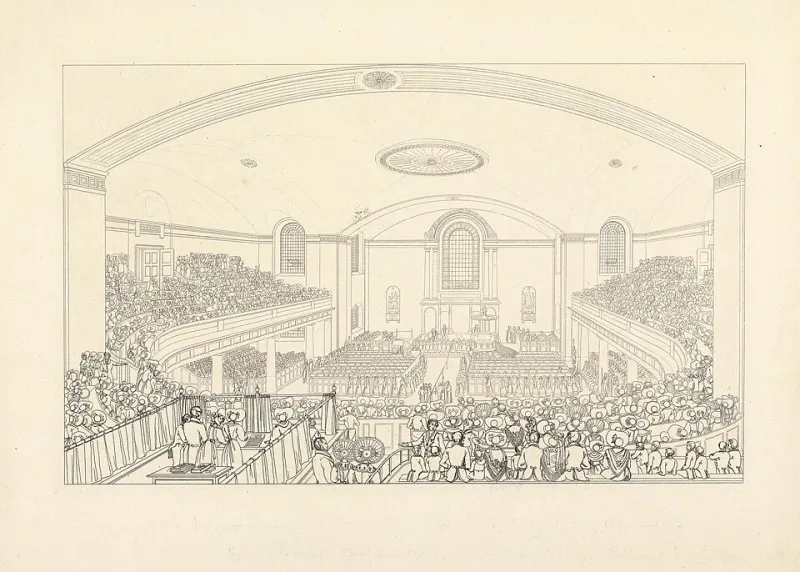
Photo: anonymous , CC0, via Wikimedia Commons
There is a noise the heating makes at Sacred Heart in the second week of November, and it is not quite a rattle. It is closer to a cough — a low, hesitant thing that travels up the pipes behind the sacristy and announces itself near the back radiator. Regulars barely look up. Visitors do.
That cough is also, unofficially, the start of the parish's winter. What follows is not dramatic: a clipboard, a servicing appointment booked in September, a basket of blankets nobody photographs, and a handful of people who know exactly which door lets in the draught.
The clipboard behind the sacristy door
The boiler gets its annual service in early autumn, before the first genuinely cold snap rather than after it. That much is routine and, frankly, boring — which is the point. The interesting part is everything that happens around it.
Radiators are bled. The hall doors get draught excluders that have been re-taped so many times they look like a school project. Someone climbs into the loft space to check lagging and comes down sneezing. The kettle in the hall kitchen is tested with the same seriousness as the heating, because on a cold morning the tea urn does more pastoral work than any committee.
All of it is written down. The clipboard lists who checked what, when, and what still needs doing. It is not elegant, but it means that in January nobody has to guess.
What a chilly Sunday actually feels like
Arrive twenty minutes early on a raw morning and you will find the porch doors propped, the radiators ticking as they come up to temperature, and a couple of volunteers in coats moving chairs in the hall.
Inside, the church holds the cold in the way old stone always does — politely, and for longer than you would like. The back is chillier than the middle. The side aisles are colder than the nave. Anyone who has sat in the same spot for thirty years has a view on this and will happily share it.
By the time the first hymn starts, the difference is usually noticeable. Not tropical. Just enough that people unbutton their coats and stop apologising for keeping their scarves on.
There is a basket of blankets at the back, and it gets used more than most people realise. There is also an unspoken etiquette about it: take one, fold it at the end, put it back. Nobody comments. That is the whole system.
How the parish decides to open a warm room
The hall does not open simply because the calendar says December. The decision is more practical than that.
The volunteers look at the forecast, at how many people are lingering after Mass rather than hurrying home, and at who is in the building — a congregation with more buggies and more walking sticks tends to tip the balance. If someone is sitting on a bench in the porch waiting for a lift that is not due for twenty minutes, that is usually answer enough.
The rule of thumb one of the stewards offers is charmingly blunt: if the people setting out the chairs are keeping their coats on indoors, the hall opens.
The unglamorous list
None of this is secret, but most of it is invisible. Roughly, the winter plan comes down to:
- A boiler service booked before the cold, not after it
- Radiators bled and checked, with the cold ones reported rather than tolerated
- Draught excluders, door closers and a stock of gaffer tape that never quite lasts the season
- Blankets washed, dried and returned to the basket
- Grit for the steps and the path down towards Lauriston Street
- A stewards' rota so the doors are open and someone is watching them
It is a modest list. It also depends entirely on people noticing things.
What neighbours can do
You do not need to join a committee to help. Most of the useful things take seconds.
Close the door behind you — properly, not almost. Do not drape coats over radiators; the church will not warm up faster and the radiator will not thank you. If a window will not shut, say so rather than assuming someone has clocked it. If you are walking past a cold radiator on your way out, mention it to a steward on the way in next week.
If you have a spare blanket doing nothing in a cupboard, the basket at the back is always glad of one. If you drive and you know someone who walks in from Tollcross or the Meadows, a lift on a wet Sunday is worth more than a sermon.
And if you have an hour on a Saturday morning, there is usually a chair that needs moving.
After the last amen
Winter in an old church is a negotiation between stone, weather and goodwill. The boiler does its part, mostly. The volunteers do rather more than theirs.
So when the pipes cough in November, it is worth remembering what follows: a clipboard, a kettle, a basket of blankets and a small group of people who would rather notice a draught themselves than wait for someone else to complain about it. That is, in the end, what warmth looks like here.