One Glove, Twelve Strangers: A Winter Sort-Through of Sacred Heart’s Lost Property
There is a box under the table in the vestibule at Sacred Heart, and it is not a glamorous box. It is a storage crate, the kind that once held photocopy paper, with a strip of masking tape on the side that says LOST — PLEASE LOOK in biro that has faded to a sort of greyish blue. It sits there through Advent, through the January sales, through the long stretch after Easter when the heaters go off and the door gets left open. Nobody quite owns it. Everybody uses it.
On a wet Tuesday morning in November 2026, with the rain coming sideways off Lauriston, we opened it up with Moira, who has been keeping an eye on it for eleven years and describes the job as "half lost-and-found, half amateur archaeology".
The crate, itemised
Here is what was in it that morning, more or less in the order we took it out.
Four single gloves. Not two, four. A navy wool one with a hole in the thumb. A red child's glove with a dinosaur on the back. A black leather glove that has gone slightly stiff, the sort that looks expensive until you lose the other one. And a fingerless mitt that nobody could explain.
Three pairs of reading glasses, two of them in cases, one of them with a prescription label from an optician on Nicholson Street that closed some years ago. A fourth pair, loose, with one arm bent outwards as if the owner had fallen asleep in them.
Two children's hats, one with a bobble the size of a satsuma. A school scarf with no name tag. A cloth bag from a bookshop that no longer exists. A paperback with a bookmark at page 61, which Moira says has been there since the spring and which she has resisted finishing on principle.
And then the Tupperware. A round one, lid present, containing nothing but a faint smell of fruitcake. A square one with somebody's initials on the base in nail varnish. And an empty shortbread tin which everyone assumes was left after a tea-and-toast morning and which has been quietly holding the gloves ever since.
"People think it's all umbrellas," Moira said, lifting out a folded umbrella that had clearly never been opened. "It's never umbrellas. Well. It's one umbrella."
What winter leaves behind
The pattern in the box follows the calendar. From October onwards, the gloves and hats arrive. A child comes in for the vigil and leaves with cold hands and a spare hat; a grandparent puts a glove down to find a hymn book and never picks it up again. By January there is a small drift of scarves at the bottom of the crate, and Moira does a clear-out in the last week of the month, keeping anything labelled and quietly moving the rest on to the charity shop on Bread Street.
Spring brings its own things. Spectacles, mostly — people take them off to read a notice in the porch and walk out without them. Summer is lighter: sunglasses, a water bottle, a folding fan, once a pair of sandals that nobody has ever adequately explained.
"It's the single gloves that get me," Moira said. "Somewhere out there is a person with one cold hand who has given up looking. And I can't put a glove on the noticeboard on its own. It looks odd."
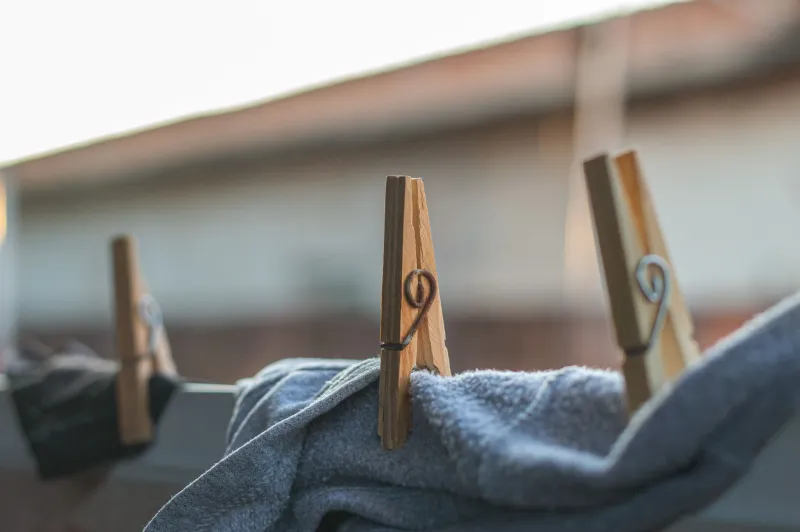
So the gloves go on a line. A piece of washing line, strung along the side wall of the hall, with wooden pegs, and every orphan glove pegged up in the hope that its owner walks past and recognises it. It is, genuinely, one of the more cheering sights in the building on a November morning — a small flotilla of gloves in navy and red and one very determined pink, waiting to be claimed.
The book of small reunions
There is also a notebook. Moira keeps a list: date found, item, where it was handed in, and — when it happens — who came back for it. The reunions are not dramatic. A man in his seventies came in for a pair of glasses and stayed for a cup of tea and a long talk about his wife, who had died in the spring. A mother collected a child's hat and then, on her way out, volunteered to help with the fair. Somebody's library book went back to Central Library three weeks late, with an apology, and was fine.
Moira's favourite, she says, was a rosary in a small suede pouch. It sat in the box for two months. Then a woman came in after a weekday Mass, described it exactly, and cried when it was handed over. "Her mother's," Moira said. "She'd been carrying it in her coat pocket for thirty years and couldn't think where she'd left it. She thought it was gone for good."
The box is not really about objects. It is about the fact that people come here, week after week, and leave a bit of themselves behind, and someone notices.
If something of yours is in there
Practicalities, then. The crate lives in the vestibule by the Lauriston Street entrance and is available whenever the church is open. Anything with a name in it is kept indefinitely; unlabelled items are held until the end of January and then passed on. Valuables — keys, phones, a purse — do not go in the crate at all; they go to the parish office during weekday hours, so ask there first. Reading glasses are kept a little longer than everything else because, as Moira points out, the people who most need them are the least likely to be able to read the sign.
And if you are sorting out a drawer at home and find a glove with no partner, you are warmly invited to bring it in. Somewhere in Edinburgh, somebody has the other one.
Your turn
We would like to hear your lost-and-found stories — not just from Sacred Heart, but from the close, the stair, the bus stop, the corner shop. The neighbour who kept a stray cat in her kitchen until the owner turned up. The child's shoe found on the wall outside and left there, hopefully, for a day and a half. The umbrella that came back three streets away.
Send them to the parish office or catch one of us at the door after Sunday Mass. We may print a few in the new year. In the meantime, the glove line stays up, the pegs are free, and the box under the table is open.