After the Amen: The Unscripted Ten Minutes That Make Sacred Heart a Parish
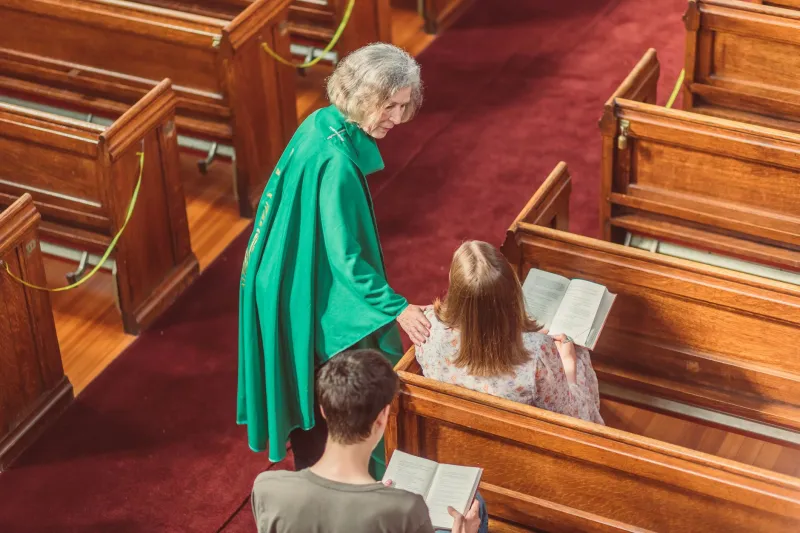
There is a moment at Sacred Heart, just after the final hymn has done its work and the recessional has reached the door, when the church seems to hold its breath. The liturgy is over. The building, however, is not quite ready to let everyone go. Coats come off pew backs. Someone drops a hymn book. A child escapes down the side aisle with a speed that suggests they have been planning it since the Gloria. And then, for roughly ten minutes, the parish does something that no rota can schedule: it becomes a room full of neighbours.
If you are new to Sacred Heart, or visiting from elsewhere in Edinburgh, those minutes can feel like a private party you have wandered into. They are not. They are the most open part of the week. Here is what tends to happen, and why it is worth lingering for.
The Slow Spill Towards the Door
Nobody officially announces the start of the after-Mass conversation. It begins in small eddies. Someone turns to the person beside them to finish a thought begun during the sign of peace. A parent crouches to zip a coat while another parent does the same, and by the time both are upright they are comparing Saturday football fixtures. Near the back, a small cluster forms around the newsletter table, not so much reading it as using it as a reason to stand still.
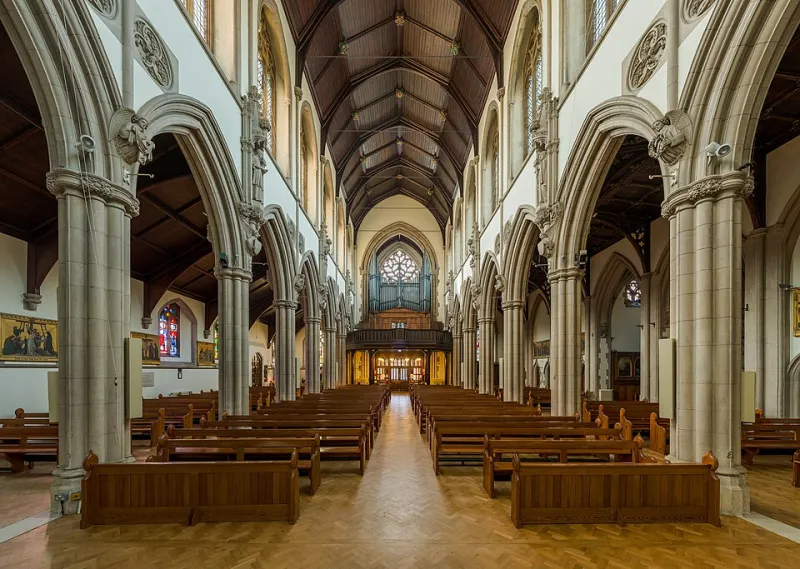
On a bright November morning the light through the glass makes the whole thing look almost staged. On a dreich one, with the rain coming sideways off Lauriston, the same scene compresses into the porch and becomes cosier for it. Either way, the geography is simple: the front steps, the porch, the patch of pavement just outside the door. That is the parish's second living room.
What the Helpers Are Actually Doing
There is a quiet choreography to the tidy-up. Chairs get stacked. Hymn books are gathered. Someone wrestles the large candle into its cupboard with the concentration of a person defusing something. It looks like work, and it is, but it is also a form of welcome. If you offer to help, you will almost certainly be handed something light and given a name to go with it.
This is the easiest way for a newcomer to break the ice. You do not need a speech. "Where does this go?" is a complete introduction. The answer will usually come with a small piece of parish lore, a comment about the weather, and an invitation to tea or coffee if there is a gathering on. In a city where it is easy to spend a whole Sunday without speaking to anyone you did not arrive with, that small transaction matters more than it sounds.
The Exits Are Part of the Welcome Too
Not everyone stays. Some people slip away during the final hymn, or with a brief nod at the door, and that is entirely fine. The parish is not a committee that takes attendance. There are people who have been coming for decades and still prefer a quiet departure, and there are visitors who are only in Edinburgh for a weekend and want to catch a train. The ten minutes after Mass are an invitation, not an obligation.
If you are someone who finds the after-service milling a bit much, a useful trick is to choose your moment rather than avoid it altogether. Say one genuine thing to one person, then go. "Lovely music today" or "I'm new, I'll see you next week" is enough. Belonging in a city parish is rarely built in dramatic gestures. It is built in small, repeatable ones.
Why Ten Minutes Carries So Much Weight
Edinburgh is a city of comings and goings. Students arrive and leave. Families move out to the suburbs and come back for the carol service. People work shifts that make a weekly routine feel like a luxury. In that context, the unstructured time after Mass does something that the liturgy itself cannot: it lets people be known in ordinary, unpolished ways. You find out who has been unwell. You hear about a job, a new baby, a bereavement, a kitchen that is finally finished. You learn which neighbour makes the best shortbread and which one will always tell you the truth about the sermon.
None of this is on the notice sheet. It does not need to be. It is the parish's unscripted second service, and it is open to anyone who happens to be standing there.
A Small Practical Guide for Your First Sunday
If you are new, aim to stay for five minutes rather than ten. Stand near the door but not in the doorway. Say hello to one person. Ask a helper where something goes. Take a newsletter, even if you read it later. If you are shy, arrive a few minutes early next week and speak to someone then — the pre-Mass quiet is just as good for a brief, low-stakes chat.
And if you are a long-standing member of the parish, the small kindness you can offer is the easiest one: notice the person standing slightly apart. A "you're new, aren't you?" is not an interrogation. It is a door held open.
The Last Hymn Is Only the Beginning
The Mass, of course, is the point. Nobody is suggesting otherwise. But the ten minutes that follow are where the parish becomes a neighbourhood — where the stranger at the back becomes the person you nod to next week, and the person you nod to becomes the one you ask about their mother. In a city that can be both beautiful and a little lonely, that is no small thing.
So next Sunday, when the last hymn fades and the doors open, do not rush off immediately. The ten-minute parish is waiting. It is informal, occasionally chaotic, and entirely yours.