Tea, Tarnish and Twenty Candles: The Volunteers Who Set Sacred Heart’s Table

Photo: NASA / Johns Hopkins University Applied Physics Laboratory / Southwest Research Institute, Public domain, via Wikimedia Commons
The last Saturday of November is rarely the loudest date in Edinburgh’s calendar. The Christmas market is already humming, the lights are up on George Street, and most of us are thinking about coats, buses and whether the heating has come on yet. At Sacred Heart, though, Saturday 28 November 2026 is a working morning. It is the sort of morning that leaves almost no trace, except a cupboard that opens smoothly, a brass candlestick that catches the light, and a candle that lights first time.
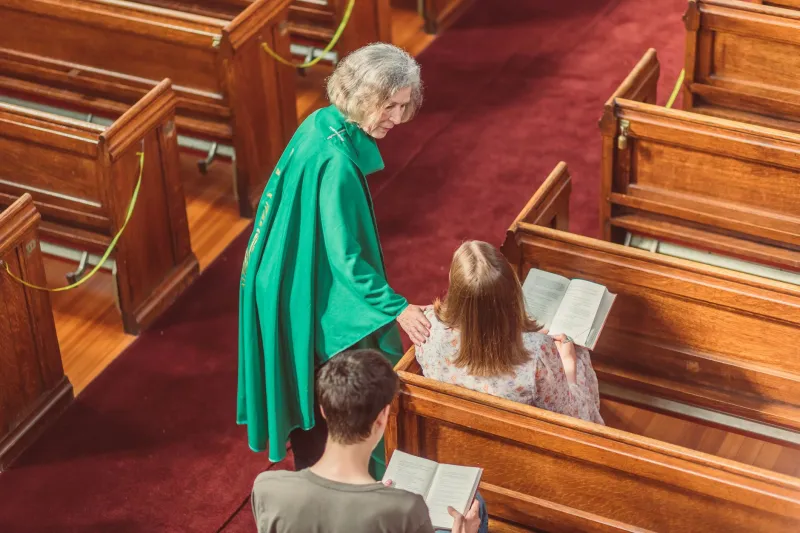
Ahead of that Saturday, I spoke to the volunteers who keep the sacristy ready. They are not a formal guild. There is no uniform, no grand title and no applause. There is a kettle, a set of keys, a few pairs of cotton gloves and a shared understanding that the quiet work needs doing before Advent begins. This is how the morning tends to unfold — and why it says more about belonging than any noticeboard ever could.
A kettle first, then the brass
The morning starts at about half past eight, or a little after. Someone unlocks the sacristy door, switches on the light and puts the kettle on. Tea is not a luxury here; it is part of the method. While the water boils, the crew check the diary for the weeks ahead: the usual weekend Masses, the extra services that Advent brings, and the small mountain of practical jobs that only appear when you stand still and look.
Brass comes next. The candlesticks and the altar cross are wiped with soft cloths, then polished with wadding until the tarnish gives way. It is fiddly, slightly smelly work, and it ruins a good pair of gloves. One volunteer describes it as “the closest thing we have to a workout.” Another says the secret is not to use too much polish. “You spend longer taking it off than putting it on,” she says. “A bit like most things.”
Beeswax candles are checked one by one. Wicks are trimmed. Cracked candles are set aside. The good ones are fitted into their holders and tested so that nobody is fumbling with a taper on a Sunday morning. The linen drawers are opened and inspected: clean altar linens, pressed and folded, with the stained ones kept back for mending or a longer soak. Nothing is thrown away in a hurry. Even a worn cloth has a life to account for.
The unglamorous checklist
By nine o’clock the sacristy smells of polish, tea and the faint sweetness of wax. The volunteers move around each other without much discussion. One dusts the ledges and the tops of cupboards. Another checks the stock of candles, charcoal and small supplies, writing a note for whoever does the next order. Someone else gives the vessels a final look, making sure the drawers are lined and the cupboard doors close properly.
It is not glamorous. There is no stained glass in this part of the building, no congregation watching, no chance of being noticed. The work is mostly repetition: clean, check, fold, put away, write a list, make another cup of tea. But repetition is the point. A parish runs on small acts of maintenance, most of which are invisible until they are missing.
The team also keep an eye on the building itself. A loose hinge, a damp patch, a bulb that has gone — these get noted and passed on. In late November, with the busiest weeks of the year coming, the sacristy crew are less of a cleaning squad and more of a quiet early-warning system. They see the place up close, week after week, and they notice when something is beginning to wear.
The people behind the polish
The volunteers are a mixed bunch. One is a retired nurse who says she likes “a job with a beginning and an end.” One works night shifts and comes in on a Saturday because it is the only time that fits. A student started helping after a flatmate invited her to a Sunday Mass; she now knows more about candle wax than she ever expected. A grandmother has been doing the linen for years and insists she is not in charge, although everyone else knows she is.
What they share is not a particular skill set. It is a willingness to turn up. That sounds modest, and it is. But in a city parish, turning up is a form of care. People come and go; flats change hands; the streets around Lauriston fill and empty with students, workers and visitors. The sacristy crew provide a thread of continuity. They are the ones who know where the spare candles are kept, which drawer holds the clean cloths and why the second cupboard door needs a firm push.
“It’s not about being holy in a showy way,” one volunteer says. “It’s about making sure the place is ready for other people. That’s it. That’s the whole job.”
Why the hidden work matters
There is a temptation to treat preparation as a backdrop to the real event. The real event, presumably, is the Mass, the carol service, the Christmas gathering. But the sacristy team know that preparation is not a backdrop. It is part of the welcome. A clean vessel, a straight linen, a candle that lights without a struggle — these are small courtesies offered to a congregation that may never know who did them.
They are also a reminder that belonging is rarely built in dramatic moments. It is built in Saturday mornings, in shared tea, in a rota that bends around people’s shifts, in someone noticing that the polish has run out. The work is unglamorous, but it is not unimportant. It is the sort of care that holds a place together.
If you are free on a Saturday, or even an hour now and then, the parish office can tell you where help is useful. You do not need to know your beeswax from your brass polish. You need to be willing to learn, to take your time and to put the kettle on. On 28 November 2026, the sacristy door will open again. The brass will be waiting.